AI Hybrid Product Photography: Why Accuracy, Authenticity and Trust Matter More Than Ever
How responsible AI hybrid product photography can help brands create beautiful imagery without compromising product accuracy, originality or customer trust.
AI is changing the world of product photography, and the creative possibilities are incredibly exciting.
From beautiful lifestyle campaigns and editorial product imagery to model photography and elaborate locations, AI allows brands to create visual content that would previously have required large production budgets, multiple locations and extensive creative teams.
But with all this creative freedom comes responsibility.
Just because we can create an incredible image, does that mean we should?
And perhaps more importantly, does the product your customer sees online accurately represent the product they’ll receive?
As a professional brand and product photographer with over 20 years of experience, I believe beautiful imagery should do more than capture attention. It should represent your product honestly, reflect your brand’s identity and give customers confidence in what they’re buying.
Because while beautiful photography might encourage someone to make their first purchase, it’s trust that brings them back.
What Does the Advertising Standards Authority Say About AI Photography?
The Advertising Standards Authority (ASA) is the UK’s independent advertising regulator, responsible for ensuring that advertising is responsible and doesn’t mislead consumers.
Under the UK CAP Code, Rule 3.1, marketing communications must not materially mislead consumers or be likely to do so.
This applies whether the imagery has been created through traditional photography, digital retouching or artificial intelligence.
The ASA’s guidance on misleading imagery explains that advertisements should not create an inaccurate impression of the product customers will receive. This includes exaggerating a product’s size, quality or appearance.
You can read the official guidance here:
ASA – Avoiding Misleading Imagery in Ads
The ASA has also published guidance specifically addressing AI-generated advertising:
ASA – Disclosure of AI in Advertising
Interestingly, the ASA doesn’t prohibit AI-generated advertising or require every AI-generated image to carry a disclosure.
What matters is the overall impression created by the advertisement and whether it could mislead the consumer.
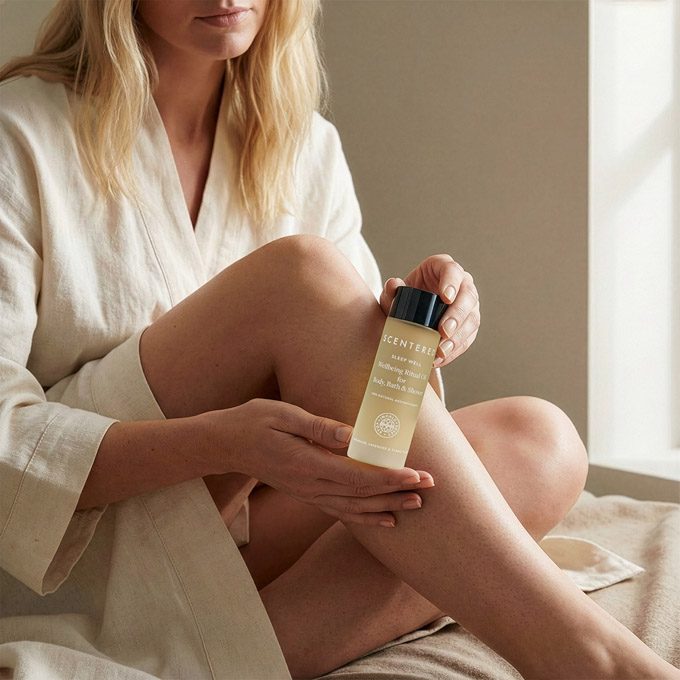
For example, using AI to place a real skincare product into a beautiful bathroom setting may be perfectly appropriate. However, using AI to change the product’s packaging, exaggerate its size or suggest skincare results that haven’t been substantiated could be misleading.
The technology isn’t the problem. It’s how we choose to use it.
5 Reasons Accurate AI Product Photography Matters for Your Brand
1. Your customers should receive what they see
Imagine ordering a beautiful skincare product online, only to discover that the jar is a completely different shape, the packaging looks cheaper or the colour isn’t quite what you expected.
Disappointing, isn’t it?
Your product photography creates an expectation long before a customer has physically held your product.
Whether you’re selling skincare, jewellery, beauty products or homeware, your customers rely on your imagery to understand exactly what they’re purchasing.
Accurate colours, realistic proportions, authentic textures and correctly represented branding all contribute to a confident buying decision.
Your photography should make your product look its best, not make it look like a different product.
2. Misleading imagery can lead to returns and refunds
A beautiful photograph might secure the sale, but if the product doesn’t match expectations, that excitement can quickly turn into disappointment.
And disappointment can be expensive.
Returns, refunds, complaints and additional customer service all cost your business time and money.
For smaller independent brands, these costs can have a significant impact.
Professional product photography helps customers make informed purchasing decisions by showing them what they’re actually buying.
The closer your imagery reflects reality, the less room there is for avoidable disappointment.
3. Your brand reputation is too valuable to risk
You’ve invested time, creativity and money into developing your products, refining your packaging and building your brand.
Why risk that investment with imagery that misrepresents what you sell?
With AI-generated photography becoming increasingly accessible, it’s tempting to create something visually spectacular.
But if your product suddenly looks larger, more luxurious or noticeably different from reality, you could be doing your brand more harm than good.
Your imagery is a reflection of your business.
Beautiful content might attract attention, but misleading content can damage the credibility you’ve worked so hard to build.
4. Trust builds long-term customer relationships
Successful brands don’t just attract customers. They build relationships with them.
When customers receive exactly what they expected, it reinforces their confidence in your business.
They feel reassured about their purchase, more comfortable buying from you again and more likely to recommend your products to others.
That trust extends beyond the product itself.
It tells customers that your brand values honesty, quality and attention to detail.
One successful purchase can be the beginning of a long-term relationship.
And accurate product photography helps create that foundation.
5. Overly AI-generated imagery can make customers question what’s real
We’ve all seen AI imagery that looks a little too perfect.
Impossibly smooth textures. Unrealistic reflections. Strange proportions. Packaging that doesn’t quite make sense.
While these images can be visually striking, they can also leave customers questioning what they’re actually looking at.
Is that the real product? Does the packaging genuinely look like that? Will it arrive looking anything like the photograph?
And once those questions arise, customers may begin to lose confidence.
AI should create exciting opportunities for brands, not introduce uncertainty about what they’re selling.
Your customers should be impressed by your imagery, not suspicious of it.
The Ethics of AI Photography: Inspiration vs Imitation
There’s another important conversation we need to have about AI-generated imagery, and that’s creative ownership, originality and respecting the work of other photographers and artists.
As a photographer, I’ve always used moodboards as part of my creative process.
Whether I’m planning a brand campaign, product shoot or fashion-inspired editorial, gathering visual references is a natural part of developing a creative concept.
We look at lighting, composition, colour palettes, styling, locations and the overall mood we want to create.
We take inspiration from different sources and use our own creativity, technical knowledge and experience to bring a new vision to life.
Inspiration has always been part of photography. But inspiration and imitation are two very different things.
Just because AI can recreate an image, should it?
AI has made it incredibly easy to generate images that closely resemble existing photographs.
With the right reference image and a few instructions, it’s possible to reproduce a composition, lighting setup, styling and overall aesthetic with remarkable similarity.
But just because technology makes something possible doesn’t automatically make it ethically right or legally permissible.
In the UK, original photographs are generally protected by copyright. Using AI doesn’t remove those protections, and creating an image that reproduces a substantial part of someone else’s protected work may raise copyright concerns.
However, there is an important distinction between being inspired by an idea, aesthetic or photographic technique and copying protected creative expression.
The legal questions surrounding AI-generated imagery can be complex, and software safeguards cannot be relied upon to prevent every potentially infringing reproduction.
That makes it even more important for photographers, creative directors and brands to take responsibility for how they use these tools.
The goal should never be to take someone else’s finished photograph and simply replace their product with yours.
Using inspiration to create something original
For me, the creative process should begin long before an image is generated.
Just as I would approach a traditional photoshoot, I start with a creative brief and moodboard to establish the direction of the campaign.
I consider the brand’s identity, target audience, styling, lighting, colour palette, composition and the story we want the images to tell.
Reference images help communicate ideas, but they shouldn’t become templates to copy.
Instead, I use those references to develop a distinct creative direction, bringing together different influences with my own photographic knowledge and art direction.
That might mean taking inspiration from the softness of lighting in one photograph, the colour palette of another and a completely different approach to styling and composition.
It’s about interpreting ideas and creating something that feels authentic to the brand.
Not reproducing someone else’s finished work.
Why a responsible AI workflow matters
With AI becoming more accessible, having a considered creative workflow is more important than ever.
For me, responsible Hybrid AI Product Photography is built around two key principles:
Product accuracy: Ensuring the real product is represented faithfully, from its shape and proportions to its colours, textures, materials and branding.
Creative originality: Using visual inspiration to develop new concepts rather than deliberately recreating another photographer’s finished work.
This means developing an original creative brief, gathering a range of references, making intentional decisions about styling and composition, and carefully reviewing the finished imagery.
Why I Choose The AI Hybrid Product Photography Approach
This is exactly why I’ve developed my approach to Hybrid AI Product Photography at HJ Photography.
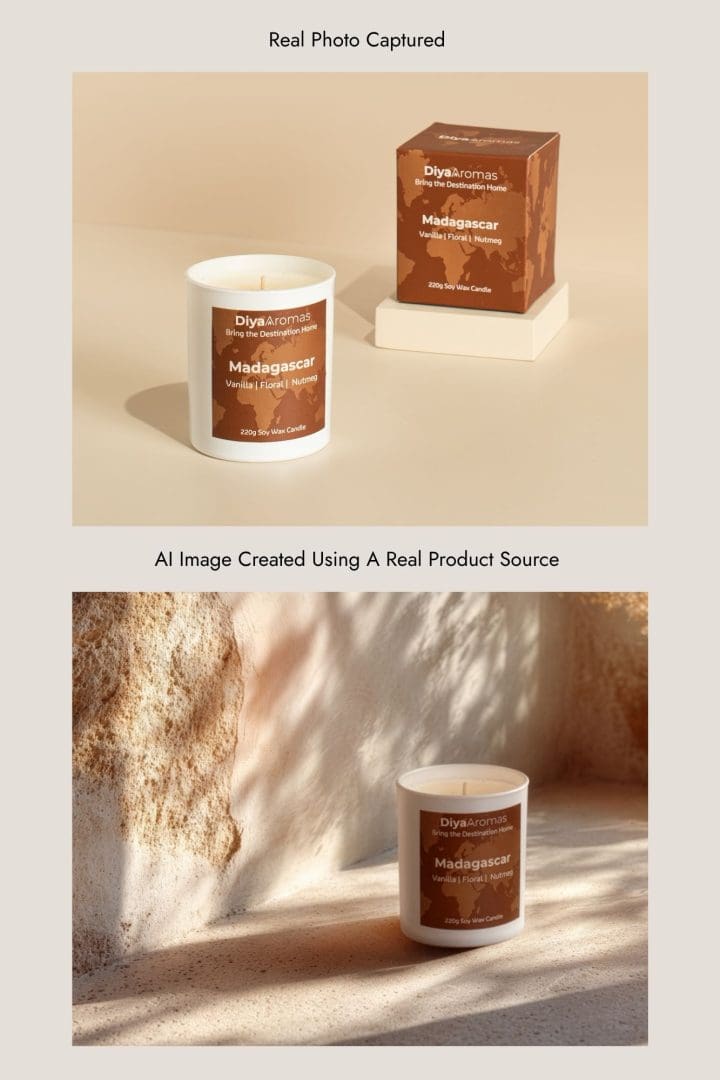
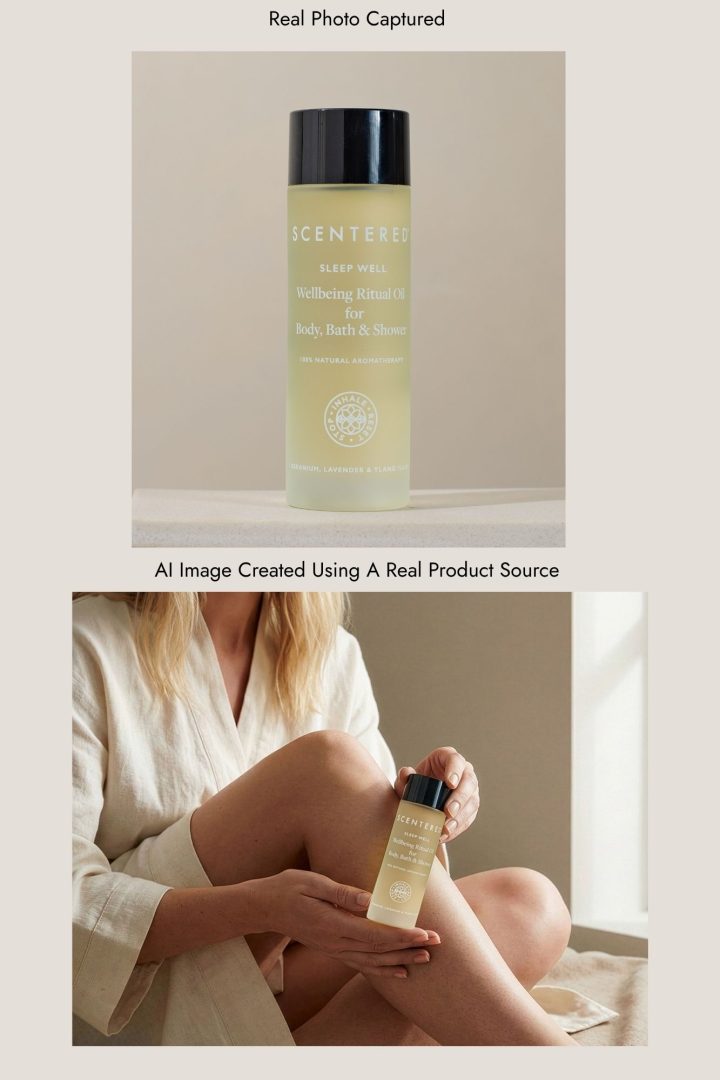
Rather than relying entirely on AI to invent a product from scratch, I begin by professionally photographing the actual physical product.
I carefully capture the details that make your product unique: its shape, proportions, colour, materials, texture, labels and branding.
These photographs become the foundation of the creative process.
I then combine my photography skills, art direction and AI technology to develop a wider library of marketing imagery.
That might include:
– A skincare product placed into a beautifully styled bathroom or lifestyle setting.
– A jewellery collection featured in a fashion-inspired editorial campaign.
– A beauty product incorporated into model-led imagery.
– A collection of product, texture and lifestyle images designed for websites, advertising and social media.
The possibilities are incredibly exciting.
But throughout the process, the aim is to preserve the accuracy of the real product while creating imagery that feels distinctive to the brand.
I also approach the creative direction in the same considered way I would approach a traditional photoshoot, developing original concepts rather than simply reproducing existing images.
This photographer-led approach is guided by the principles of truthful advertising and responsible creative practice.
Every finished campaign still needs to be considered in context, particularly where imagery suggests product performance, endorsements or results.
Beautiful Imagery Should Build Trust, Not Just Attention
The way we create commercial imagery is evolving, but the fundamentals of good photography and strong branding haven’t changed.
Your customers still want to know what they’re buying.
They still want to trust the brands they choose.
And your business still needs imagery that communicates quality, authenticity and professionalism.
AI gives us extraordinary creative opportunities, but those opportunities come with a responsibility to use the technology thoughtfully.
For me, that means staying true to the product, respecting the work of other creatives and creating imagery that has a genuine purpose within a brand’s marketing.
Because the best product photography doesn’t just make people want to buy. It makes them feel confident about what they’re buying.
Let’s Create Product Photography That Builds Trust
At HJ Photography, I combine professional product photography, creative direction and AI to create distinctive marketing campaigns that keep your actual product at the heart of the story.
From skincare and beauty to jewellery and lifestyle brands, my AI Hybrid Product Photography service helps businesses create a versatile library of content while prioritising product accuracy, originality and brand consistency.
Real products. Real photography. AI-enhanced creativity.
Interested in exploring what’s possible for your brand?
Get in touch with me to discuss your next product photography campaign combined with AI.